

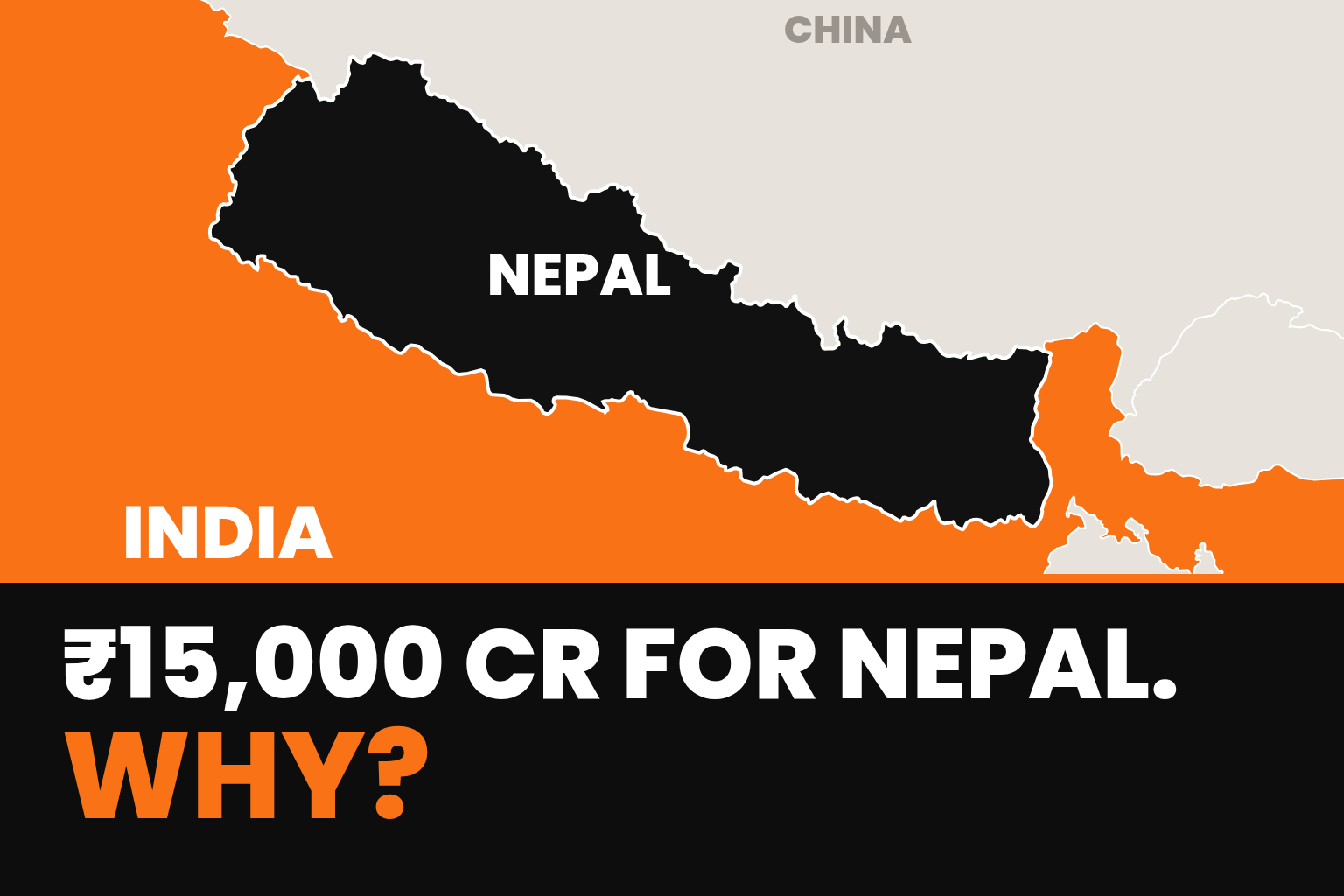
On 22 and 23 November, a Prime Minister landed in Delhi on his first visit to India since taking office. By the end of day two, two countries had flagged off a train, opened a bridge, laid foundation stones for a hydropower plant and a fuel terminal, and put a number on the table: ₹15,000 crore.
What all is covered in this blog
Numbers make headlines. The reasons behind them make answers. This blog walks through the whole story from an aspirant’s seat: what India announced, why Nepal is different from every other neighbour, and how to use it in Prelims, Mains and Essay.
The ₹15,000 crore announcement: grants versus credit, and what is still undecided
Geography and history: the open border, the 1950 treaty and India’s strategic interests
Energy: hydropower, electricity trade and petroleum pipelines
Connectivity: ports, rail, roads and why access matters to a landlocked Nepal
The unresolved boundary: why investment doesn’t settle territorial disagreements
The China factor: how India builds influence without taking Nepal for granted
Prelims facts and Mains questions
GS angles: GS1 (geography), GS2 (international relations, neighbourhood), GS3 (energy, infrastructure), plus Prelims.
1. The ₹15,000 crore announcement
Prime Minister Balendra Shah of Nepal was in India on a state visit on 22 and 23 November 2026. The two leaders adopted a Joint Vision called “Viksit Bharat and Samunnat Nepal”, a roadmap for the partnership across ten pillars.
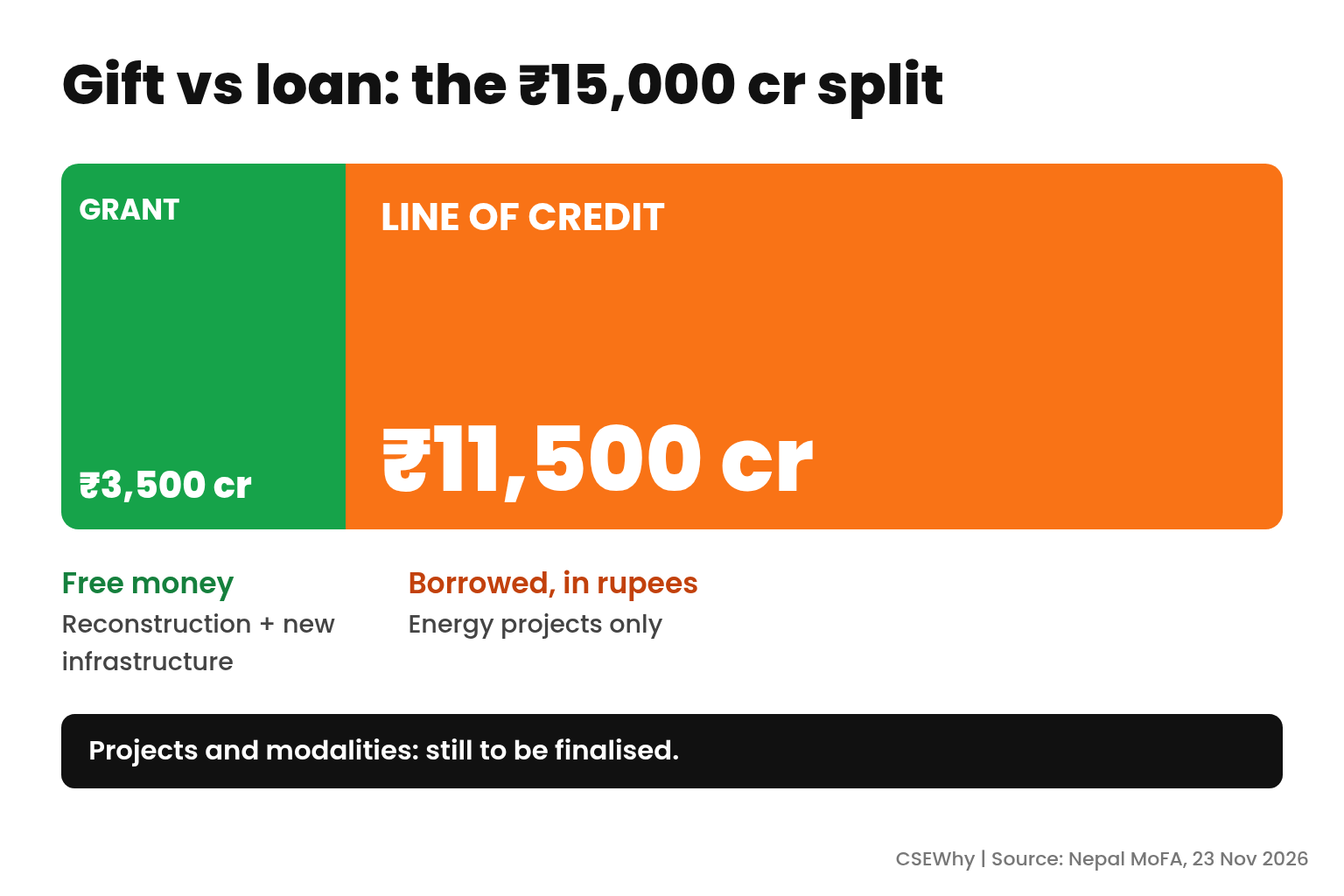
India announced ₹15,000 crore of development assistance. Read the split carefully, because that is where the exam question hides:
₹3,500 crore grant for post-disaster reconstruction and new infrastructure projects
₹11,500 crore rupee-denominated line of credit for energy sector projects
A grant is a gift. A line of credit is a loan. Only about 23 per cent of the package is free money. The rest is borrowed, tied to energy, and counted in rupees, not dollars.
One more line matters: the joint statement says specific projects and modalities will be finalised through mutual consultations. So this is an announcement of intent, not yet a list of funded projects. Write it that way in your answers.
2. Geography and history: why this border is different
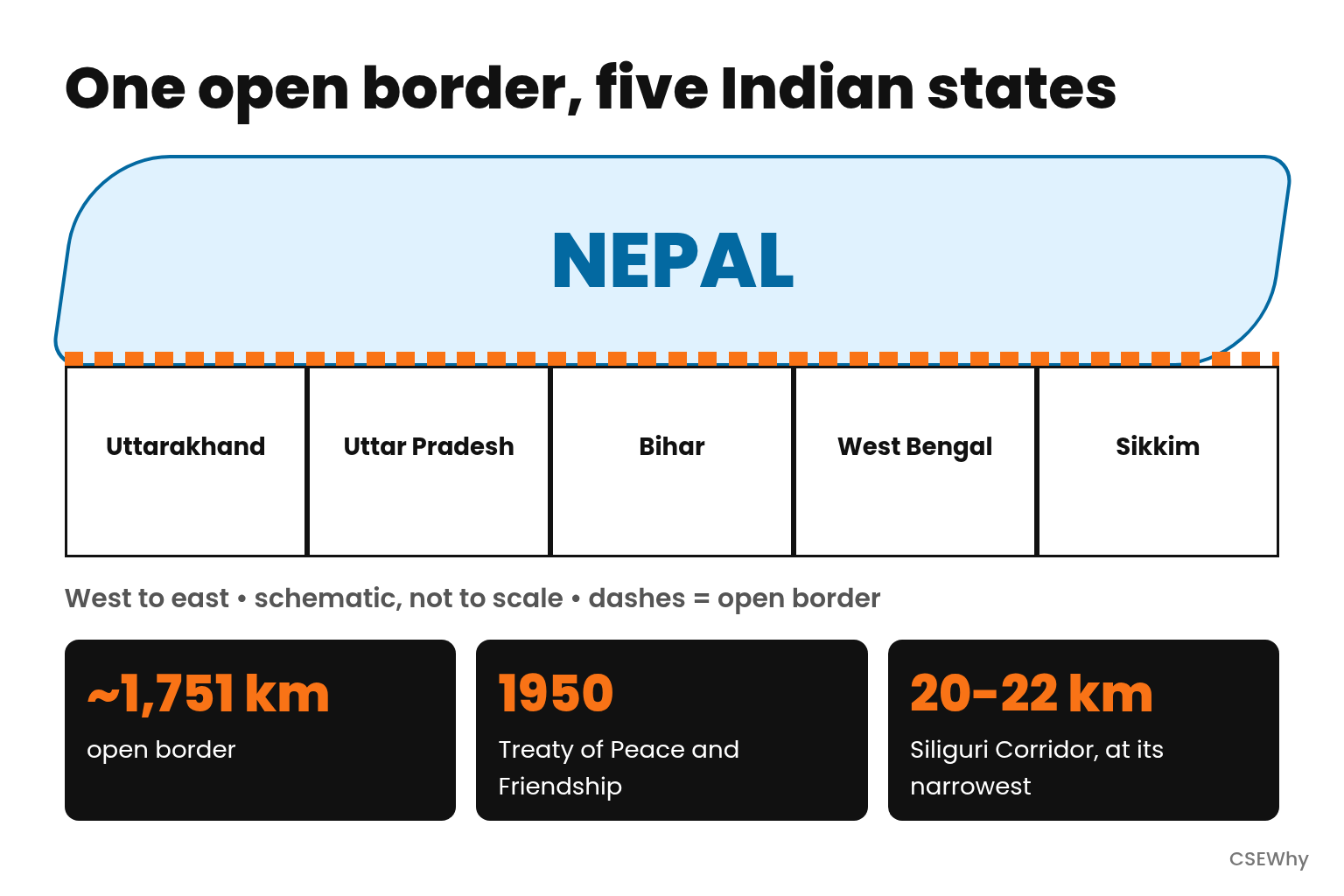
India and Nepal share an open border of about 1,751 km that runs along five Indian states: Uttarakhand, Uttar Pradesh, Bihar, West Bengal and Sikkim.
Nepal matters to India as a neighbour along an open border, an upstream river country and a transit partner.
Several rivers that rise in Nepal, including the Kosi, Gandak, Rapti and Sarda, are tributaries in the Ganga basin. Water and floods in Nepal’s basins matter downstream in India.
The Siliguri Corridor, the “Chicken’s Neck”, is only about 20 to 22 km wide at its narrowest. It joins the North-East to the rest of India, with Nepal to its west.
The foundation of it all is the 1950 Treaty of Peace and Friendship, signed at Kathmandu on 31 July 1950. Articles VI and VII give citizens of each country equal rights in residence, property, employment and movement in the other.
Why this visit stands out: the Joint Vision says existing agreements, including the 1950 Treaty, could be reviewed on the basis of mutual consent, to reflect “contemporary political, economic and technological realities”.
Retain this: a review of the 1950 treaty is stated as possible, by mutual consent. It is not a decision.
3. Energy: where the rupee actually goes
The ₹11,500 crore credit line is for energy. That tells you where the money is meant to go.
The visit put several hydropower and grid markers down:
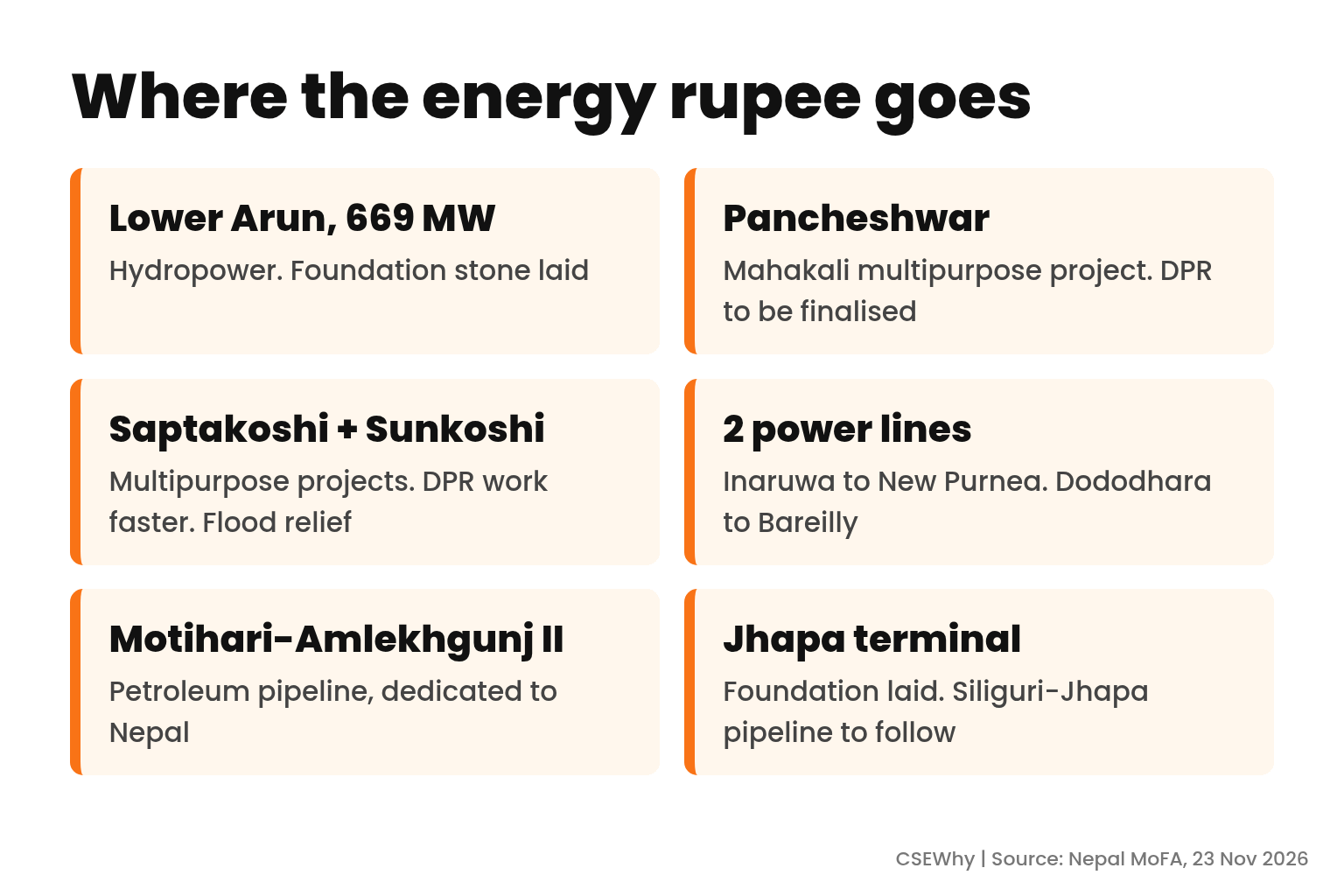
Lower Arun, 669 MW: foundation stone laid virtually
Pancheshwar Multipurpose Project: both sides asked for the Detailed Project Report to be finalised quickly, so that work can start
Saptakoshi and Sunkoshi multipurpose projects: DPR work to be speeded up, to harness water and reduce flood damage
Two cross-border transmission lines: Inaruwa to New Purnea, and Dododhara to Bareilly, with joint ventures being formed
Petroleum: phase II of the Motihari-Amlekhgunj pipeline was dedicated to Nepal, a petroleum terminal at Jhapa got its foundation stone, and both sides pressed for the Siliguri-Jhapa pipeline. A gas pipeline will be explored.
This is a two-way deal. Pipelines carry fuel into Nepal. Hydropower and power lines are about trade in electricity, under the Long Term Power Trade Agreement that the joint release mentions. Interdependence is the strategy.
4. Connectivity: from Kandla to Janakpur
For a landlocked country, access is sovereignty. The announcements read like a map being redrawn with rails, roads and ports.
Sea access: a new transit route for Nepal’s trade through Deendayal Port (Kandla, Gujarat). Access to Paradip in Odisha will follow once the infrastructure is ready.
Rail: the Sarayu-Kamala Express now runs between Ayodhya and Janakpur. The Final Location Survey for an electrified broad-gauge Raxaul-Kathmandu line is done, and both sides will work on Nepal’s East-West rail link.
Road: a motorable bridge across the Mahakali between Dharchula (India) and Darchula (Nepal) was inaugurated.
Border posts: foundation stone for a new Integrated Check Post at Banbasa. Bhairahawa-Sunauli and Dodhara-Chandani are under construction. Three ICPs already work.
Air: the Kathmandu-Bhairahawa-Lucknow route, until now one-way, will become bidirectional.
Payments: UPI is already linked with Nepal’s national payment system, and cross-border retail payments are to be speeded up.
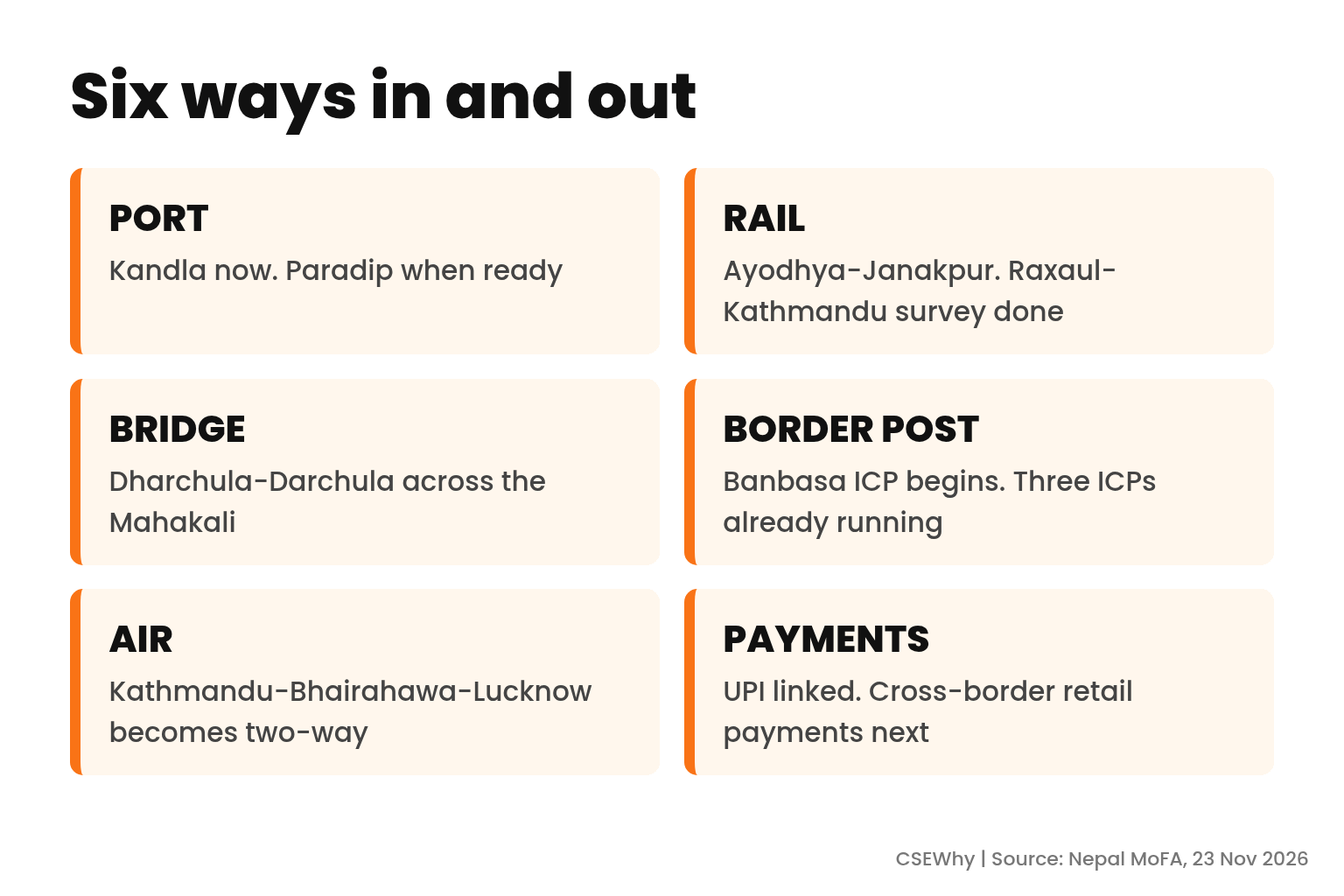
The pattern: the announcements aim to give Nepal more routes and more choices.
5. The unresolved boundary
Here is the uncomfortable part. The joint press release says the Foreign Secretaries will work on “outstanding boundary issues”. The Joint Vision says all outstanding matters, boundary included, will be resolved through mutual discussion and dialogue.
The dispute behind that line is Kalapani, Lipulekh and Limpiyadhura. Nepal places them in Byas Rural Municipality of Darchula district. In November 2019 India published a new political map that placed Kalapani inside India. Six months later, in May 2020, Nepal unveiled its own map including all three areas, adding about 335 sq km to its territory on paper. The row has not gone away.
The lesson for aspirants: infrastructure diplomacy builds trust. It does not settle territory. The two run on separate tracks, and a good answer says so.
6. The China factor
You cannot write about Nepal without Beijing in the background. Nepal shares its northern border with China. According to Nepal's foreign ministry, it signed an MoU on cooperation under China's Belt and Road Initiative on 12 May 2017, and a Framework for Belt and Road Cooperation on 4 December 2024.
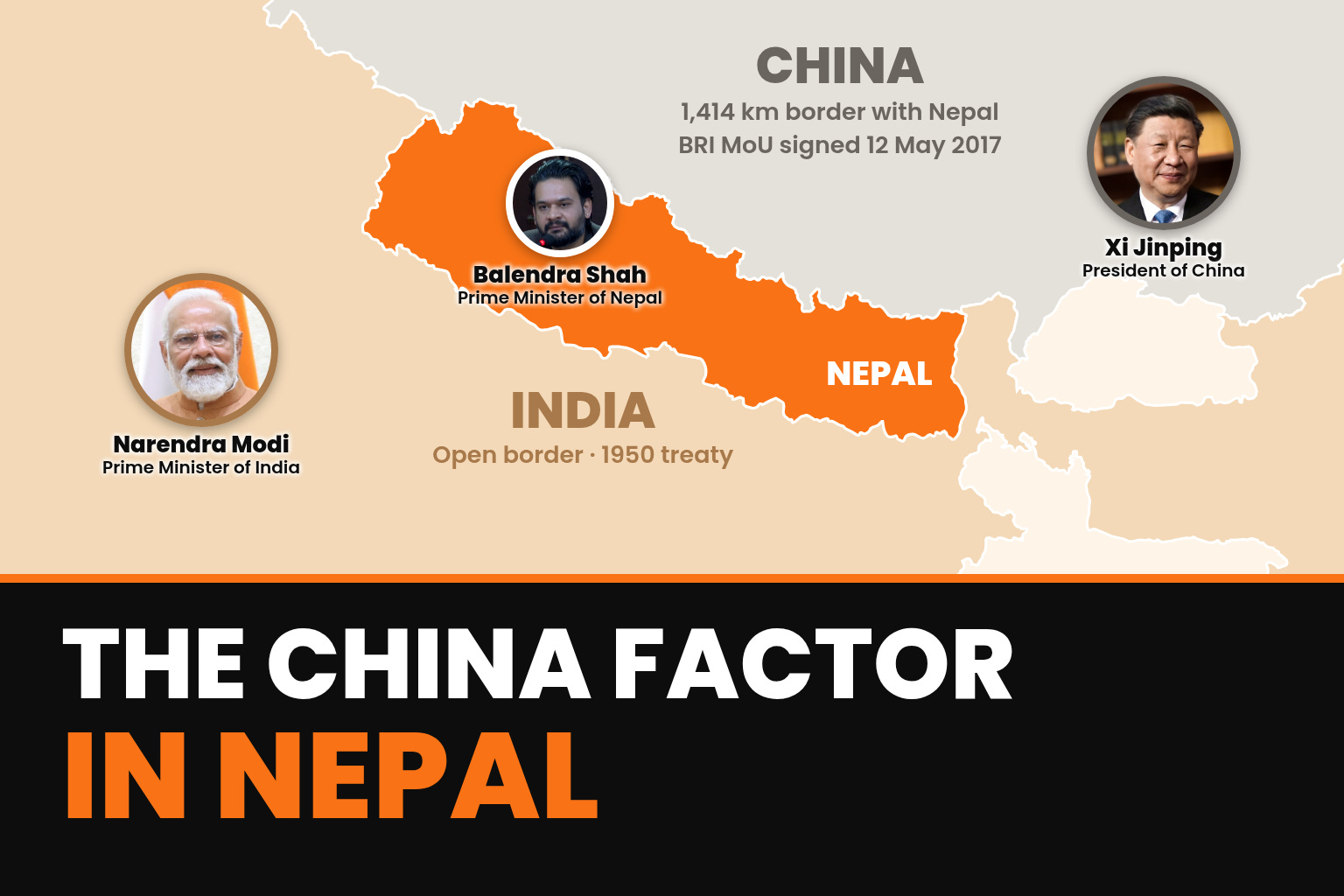
Portraits (cropped): Xi Jinping, Kremlin.ru, CC BY 4.0. Narendra Modi, Prime Minister’s Office, GODL-India. Balendra Shah, via Wikimedia Commons, CC BY. Map: Natural Earth, public domain; stylised, not an official boundary map. Full links are under the sources below.
The useful question for a Mains answer is not “who is winning”. It is what each side can offer, and what Nepal wants in return.
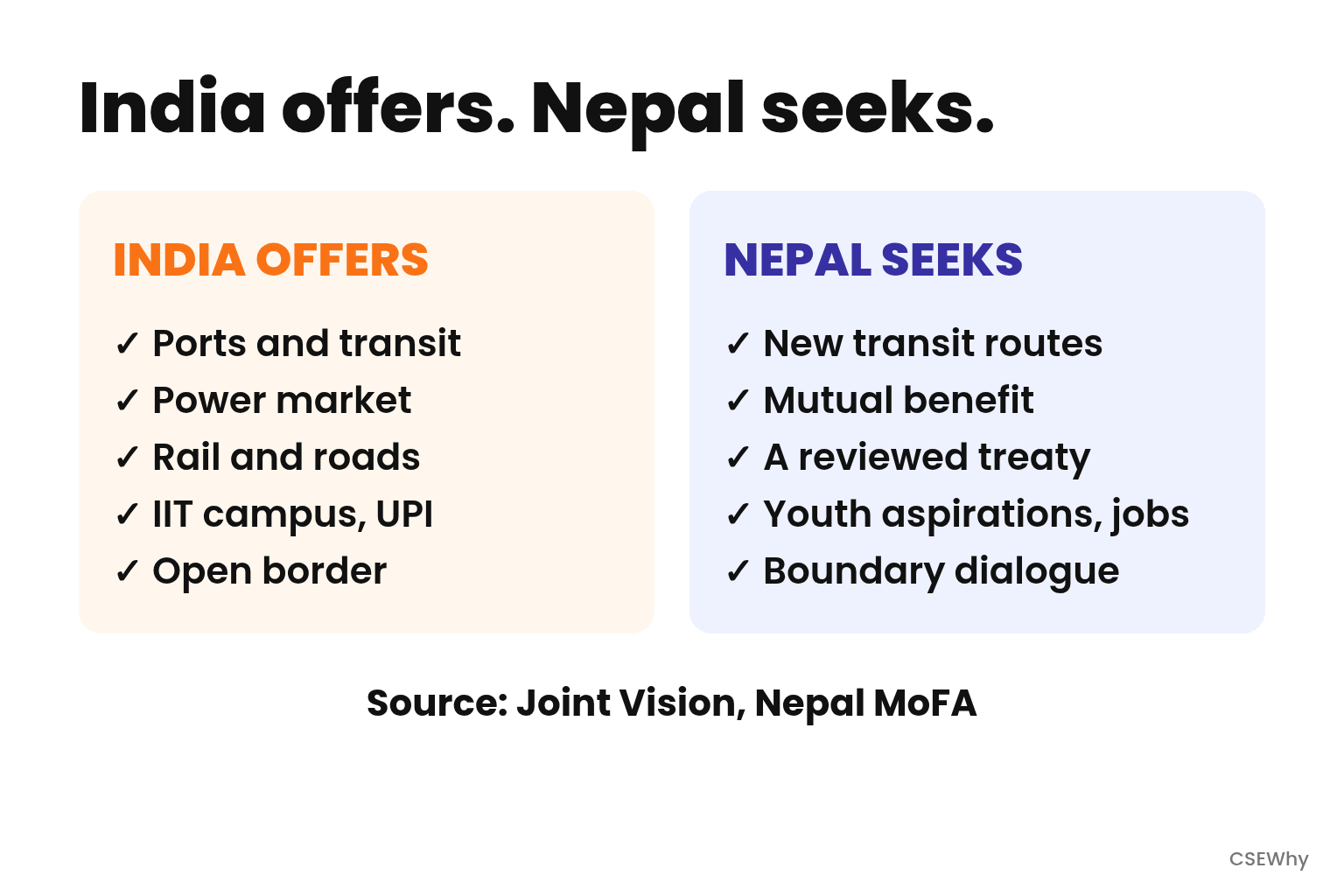
India’s strengths: an open border, shared markets, deep people-to-people ties, existing energy and trade links, and now a longer menu: ports, rail, power, an offshore IIT campus, payments.
India's challenge: a partnership has to feel like one. The Joint Vision's own words are mutual respect and benefit.
The Joint Vision speaks of mutual respect and benefit and a forward-looking legal framework. That is the language of partners. And partnership is what makes influence last.
7. Prelims facts and Mains questions
Prelims box
Visit: 22-23 November 2026, Prime Minister Balendra Shah’s first visit to India since taking office
Joint Vision: “Viksit Bharat and Samunnat Nepal”
Package: ₹15,000 crore = ₹3,500 crore grant + ₹11,500 crore rupee line of credit (energy)
Lower Arun: 669 MW
Transit ports for Nepal: Kandla now, Paradip later
Rail: Ayodhya-Janakpur (Sarayu-Kamala Express). Raxaul-Kathmandu survey finalised.
Bridge: Dharchula-Darchula over the Mahakali
Check post foundation: Banbasa
Treaty: 1950 Treaty of Peace and Friendship, now open to review by mutual consent
Mains practice
GS 2 | 150 words: “India’s neighbourhood policy is moving from aid to interdependence.” Discuss with reference to India-Nepal relations.
GS 2 / GS 3 | 150 words: Examine the role of hydropower and energy trade in India-Nepal relations.
GS 2 | 150 words: Why does infrastructure cooperation alone not resolve boundary disputes? Illustrate with India and Nepal.
Answer frame: state what was announced (with the grant and credit split), explain the strategic logic (energy, access, neighbourhood), name the limits (boundary, China, Nepal’s wish for choices), and close with a way forward: dialogue, a reviewed treaty, and projects that actually get finalised.
Read the sources, then make your notes
Joint Press Release on the State Visit of the Prime Minister of Nepal to India, 22-23 November 2026 (Nepal Ministry of Foreign Affairs)
Joint Vision “Viksit Bharat and Samunnat Nepal: Re-imagining the Partnership” (Nepal Ministry of Foreign Affairs)
Treaty of Peace and Friendship between India and Nepal, 1950
The Kathmandu Post, May 2020: Nepal’s updated political map
Nepal Ministry of Foreign Affairs: Nepal-China relations (Belt and Road MoU, 12 May 2017; Framework for Belt and Road Cooperation, 4 December 2024)
PIB, 19 December 2022: Bilateral Mechanism for Flood Mitigation with Nepal
Al Jazeera, 8 November 2019: India’s updated political map stirs controversy in Nepal
India-Nepal border: about 1,751 km along Uttarakhand, Uttar Pradesh, Bihar, West Bengal and Sikkim (Wikipedia, “India–Nepal border”)
Siliguri Corridor, about 20-22 km wide at its narrowest (Learn Thru Practice UPSC glossary)
Portrait of Xi Jinping: Kremlin.ru, CC BY 4.0, cropped (source and licence)
Portrait of Narendra Modi: Prime Minister’s Office, GODL-India, cropped (source and licence)
Portrait of Balendra Shah: via Wikimedia Commons, CC BY, cropped (source and licence)


One visit, one number, and one question India will keep facing: how do you stay close to a neighbour without crowding it? For daily current affairs, high-value PDFs and notes, join the CSEWhy Telegram channel: telegram.me/csewhy