

PM Modi’s Three-Nation Tour: What It Means for India’s Foreign Policy
Prime Minister Narendra Modi’s visit to Indonesia, Australia, and New Zealand was more than a series of diplomatic meetings. The tour reflected India’s growing focus on the Indo-Pacific, economic security, defense cooperation and strategic partnerships.
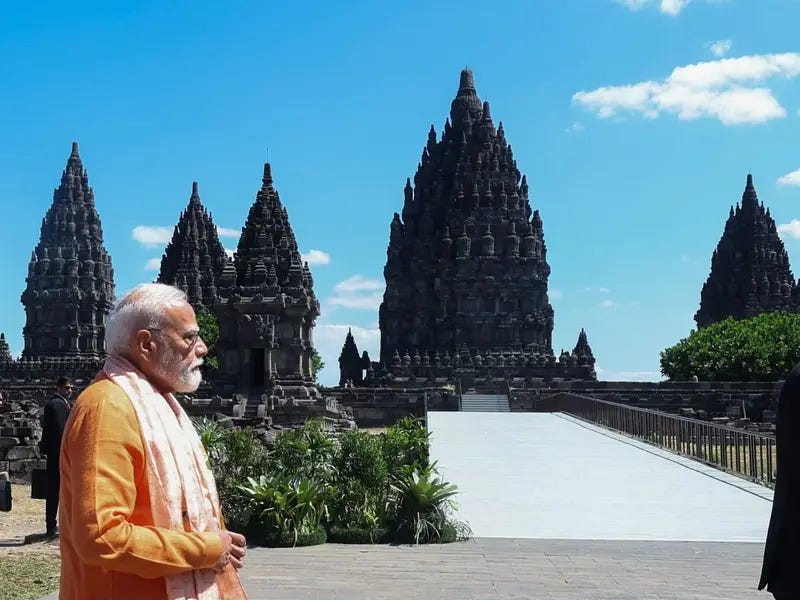
For UPSC aspirants, this topic connects India’s foreign policy, Act East Policy, Indo-Pacific strategy, maritime security, critical minerals, trade and strategic autonomy.
Why This Tour Matters
India's foreign policy is increasingly focused on building strong partnerships in the Indo-Pacific, the region that has become the center of global trade, technology and geopolitical competition.
The three-country visit aimed to:
• Strengthen strategic partnerships.
• Enhance maritime security.
• Secure supply chains for critical minerals.
• Expand trade and investment.
• Promote a free and open Indo-Pacific.
The visit also reflects India's policy of engaging with multiple partners while maintaining strategic autonomy.
Indonesia: Maritime Partner
Indonesia occupies a strategically important location near the Strait of Malacca, one of the world's busiest sea routes.
India and Indonesia agreed to strengthen cooperation in:
• Maritime security
• Naval cooperation
• Defence partnership
• Blue Economy
• Regional stability
The partnership supports India's SAGAR (Security and Growth for All in the Region) vision and strengthens cooperation in the Indian Ocean Region.
Australia: Partnership of the Future
Australia has emerged as one of India's most important strategic partners.
Critical Minerals
Australia is among the world's largest producers of lithium, cobalt and rare earth minerals, which are essential for:
• Electric vehicles
• Renewable energy
• Electronics
• Defense manufacturing
These resources are crucial for India's clean energy transition and manufacturing ambitions.
Clean Energy
• Green hydrogen
• Renewable energy
• Climate technologies
Technology
• Artificial Intelligence
• Cyber security
• Space technology
• Innovation
Defense
The two countries continue to strengthen military exercises and Indo-Pacific security cooperation through forums like the Quad.
New Zealand: Economic and Strategic Ties
India's engagement with New Zealand is steadily growing.
The visit focused on:
• Trade and investment
• Education
• Agriculture
• Maritime cooperation
• Indo-Pacific security
The large Indian diaspora also acts as a bridge between the two countries.
Why This Tour Is Strategically Important?
The three-nation visit reflects India's broader foreign policy objectives.
Strengthening the Indo-Pacific
India continues to build partnerships with countries that support:
• Freedom of navigation.
• Rules-based international order.
• Peaceful resolution of disputes.
Diversifying Strategic Partnerships
Rather than depending on any single country, India follows a policy of:
• Multi-alignment.
• Strategic autonomy.
• Issue-based cooperation.
Economic Security
The tour supports India's goals of:
• Securing critical mineral supply chains.
• Expanding exports.
• Attracting investments.
• Strengthening resilient supply chains.
How This Supports India's Foreign Policy?
The visit aligns with several major policy frameworks:
• Act East Policy
• Indo-Pacific Oceans Initiative (IPOI)
• SAGAR (Security and Growth for All in the Region)
• Atmanirbhar Bharat
• Multi-alignment strategy
Together, these initiatives aim to enhance India's strategic influence while promoting regional stability.
Challenges Ahead
Despite stronger partnerships, India faces several challenges:
• China's growing influence in the Indo-Pacific.
• Supply chain vulnerabilities.
• Global geopolitical uncertainty.
• Balancing relations among major powers.
• Converting diplomatic agreements into concrete outcomes.
Addressing these challenges will require sustained engagement and implementation.
Conclusion
Prime Minister Modi's three-nation tour demonstrates India's effort to build stronger partnerships across the Indo-Pacific while balancing security, economic growth and strategic interests.
As India seeks a larger role in the Indo-Pacific, such engagements reinforce its vision of a free, open, inclusive and rules-based region, while advancing national interests through diplomacy, economic resilience and strategic autonomy.