

Most aspirants read this as current affairs.
Big mistake.
UPSC doesn’t care about “what happened.”
It cares about:
👉 What rules allow it to happen?
👉 Who has authority?
👉 Where does international law actually stand?
First, understand the setting
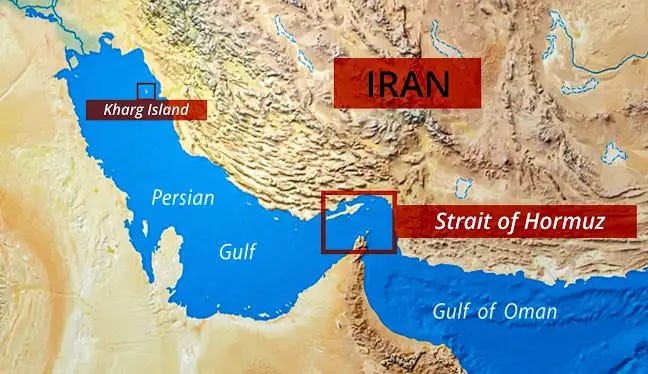
There’s a narrow sea route called the Strait of Hormuz.
It connects:
Persian Gulf → Open ocean
And through this tiny stretch:
👉 Nearly one-third of global oil trade passes.
Now imagine this:
If this route gets blocked…
It’s not just a regional issue.
It becomes a global economic shock.
So who owns this water?
This is where most people get confused.
The seas are not owned like land.
They are:
👉 “Global commons”
Which means:
No single country controls them fully
But they are regulated collectively
The key rulebook: UNCLOS
Everything revolves around one framework:
👉 United Nations Convention on the Law of the Sea (UNCLOS)
This convention decides:
Who controls what part of the sea
What rights ships have
What countries can or cannot do
Now the real question:
Can a country block the Strait of Hormuz?
Short answer:
👉 No. Not easily.
Because this strait falls under:
👉 “Transit Passage”
What is Transit Passage?
It means:
Ships of all countries can pass
No need for permission
Passage must be continuous and fast
Even warships are allowed
BUT…
They must:
Not threaten coastal states
Not violate laws unnecessarily
Why this matters
Because even if:
Iran controls one side
Oman controls the other
They cannot just say:
👉 “No one passes from today.”
That would violate international law.
Then how do conflicts happen?
Because law ≠ power.
Countries still:
Intercept ships
Seize cargo
Impose restrictions
And they justify it using:
👉 “Security concerns”
👉 “Sanctions enforcement”
👉 “National interest”
Example: U.S. vs Iran situation
When tensions rise:
Iran threatens to block the strait
U.S. increases naval presence
Ships get intercepted
But notice something:
👉 No one openly says “We are breaking international law.”
Instead, they:
Twist interpretations
Use legal grey areas
Or act without formal approval
What about the United Nations?
In theory:
👉 Only the UN Security Council can authorize:
Naval blockades
Enforcement actions
But in reality:
👉 Powerful countries often act independently.
This creates:
Legal ambiguity
Political tension
Strategic signaling
Hidden UPSC angle (this is important)
UPSC is not testing:
👉 “Where is Strait of Hormuz?”
It is testing:
Difference between territorial waters vs high seas
Meaning of transit passage
Role of UNCLOS
Limits of state sovereignty
One mental model to remember
Think of international waters like a highway:
Countries = landowners near the road
Ships = vehicles
UNCLOS = traffic rules
No country can block the highway…
But powerful ones can:
👉 slow traffic
👉 check vehicles
👉 create pressure
Final takeaway
The Strait of Hormuz is not just about oil.
It is about:
👉 Law vs Power
👉 Rules vs Reality
👉 Geography vs Strategy
And for UPSC?
If you understand this topic like a story…
You won’t just remember it.
👉 You’ll decode any question around it.